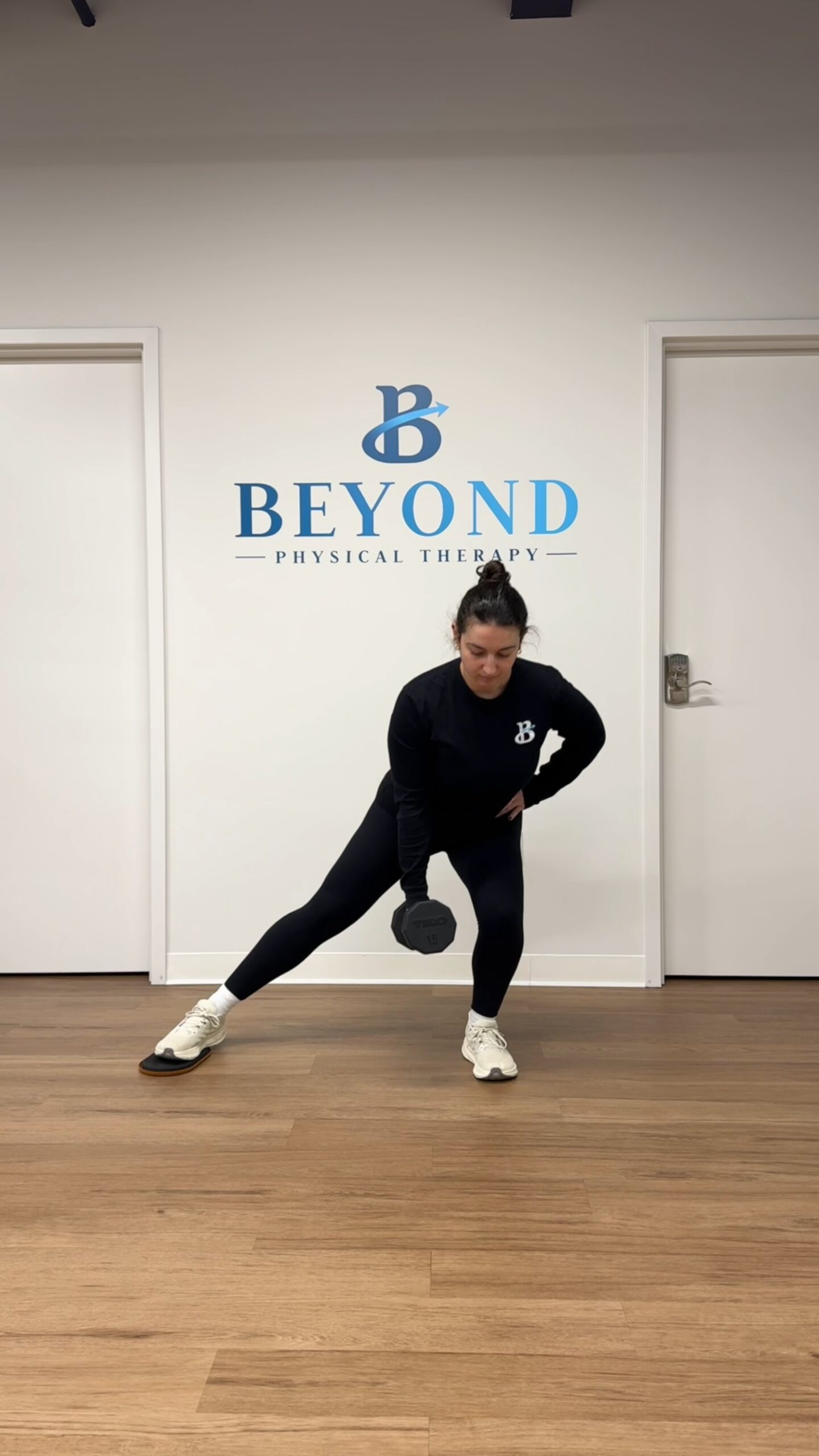
Your inner thighs are doing way more than you think. Let’s talk about why your adductor strength matters, especially for women.
What are your adductors?
Your adductors are the group of muscles along your inner thigh. They run from your pelvis down to just below your knee.
They function primarily to bring your legs towards each other, which is called “hip adduction.” This is the opposite movement of your hip abductors such as gluteus medius, which we train in ways such as side leg raises, side planks, and more.
In addition to performing hip adduction, your adductors also help move your hip forward into flexion and backwards into extension. They support the muscles that primarily perform those actions, the quads and the hamstrings, when needed.
And in addition to all of those actions, your adductors also help to stabilize your pelvis. By attaching at your pelvis, the strength and flexibility of your adductors can greatly contribute to the level of control you have over your pelvis. This directly impacts your pelvic floor, which is located right inside the pelvis.
Adductor Dysfunction
When your adductors aren’t functioning properly, you can feel symptoms such as groin pain or pain at the front of your pelvis or lower abdomen. Sometimes you can feel this during activities where one leg is doing something different than the other leg: think walking, running, lunges, or carrying your toddler or heavy grocery bags on one side.
During pregnancy, we very commonly see pelvic pain associated with adductor weakness. Symptoms can include all of the above mentioned, as well as pain rolling in bed, getting in/out of the car, or going up/down stairs.
Most women will experience some form of adductor weakness during their postpartum journey. Most times this can feel as though certain movements or exercises just feel “off” or “unstable.” If you’re feeling pain or an odd feeling near your pubic bone, especially during single leg movements, it might be related to your adductors.
We also see adductor dysfunction show up quite a bit in our athletes. When sprinting, cutting, jumping – or any form of moving quickly – your adductors play a big role in providing that stability to your pelvis and allowing you the power to perform your activity. Because adductors are so often neglected in training programs, adding in some mobility and strengthening work can make a big difference in your sport performance.
Adductors and the Pelvic Floor
We often see a connection between adductor function and pelvic floor function. These muscle groups all connect at the pelvis, and function as part of a bigger system during almost everything we do. In PT, we connect the dots between tightness or weakness in your inner thighs and pelvic floor muscle dysfunction, such as urinary incontinence with jumping or pelvic pain during exercise.
How Can I Work on Improving My Adductors?
Strong adductors mean a more stable pelvis, a better-supported pelvic floor, and more confidence in every lunge, pivot, and postpartum stroller walk. You don’t need to wait for pain to start training them.
That said, if you’re dealing with groin or pelvic pain that isn’t improving, tightness in your inner thighs, or pain alongside pelvic floor symptoms like leaking or heaviness, it’s worth meeting with your physical therapist.
Your PT will help you create a program that best fits your specific needs – which may include mobilizing the soft tissue of your adductors with manual therapy, lengthening the muscles with specific stretches, and strengthening them in various positions based on the demands your body experiences daily.
At BEYOND Physical Therapy in Newton, we specialize in helping women move, train, and feel strong through every season of life. Book a free introduction call to see how we can help you get back to moving without limits.
Disclaimer: The exercises demonstrated in this post are intended for general educational purposes only and do not constitute medical advice. Always consult with a licensed physical therapist or healthcare provider before starting any new exercise program, especially if you are recovering from an injury or have specific medical concerns.