
You’ve probably heard about the hot flashes, the mood changes, the disordered sleep, and the irregular periods. But there’s a whole other side of perimenopause that people do not talk about enough – and that’s what we see on a daily basis as physical therapists.
The joint pain that appeared out of nowhere, the leaking that got worse even though nothing changed, the muscles that feel harder to build and easier to lose, and the recovery that takes longer than usual.
This isn’t in your head and it’s not just aging. These are all components of perimenopause, and they are all worth talking about.
What is Perimenopause?
Perimenopause is the period of time leading up to the date of menopause (menopause is exactly 12 months after your last period). Perimenopause can start many years before the date of menopause, even 10 years prior to menopause, which is part of what makes it so challenging to know if some symptoms are related to perimenopause or not. During this time, estrogen levels fluctuate and gradually decline.
What estrogen does, and what happens when it declines
Estrogen is a reproductive hormone that plays important roles in muscle development, bone health, and connective tissue throughout the body. When estrogen levels change during perimenopause, you can see signs of that through many systems of the body.
Here’s what it looks like in real life:
Joint pain: Musculoskeletal pain is one of the most common symptoms of perimenopause. A systematic review and meta-analysis found that 71% of perimenopause women experience musculoskeletal pain, and that perimenopausal women are more likely to experience this than pre-menopausal women (1). This might present as a new onset of pain in your joints, such as your knees, hips, or back, without any injury. We also see this present as stiffness in those areas, or feeling tight without knowing the cause.
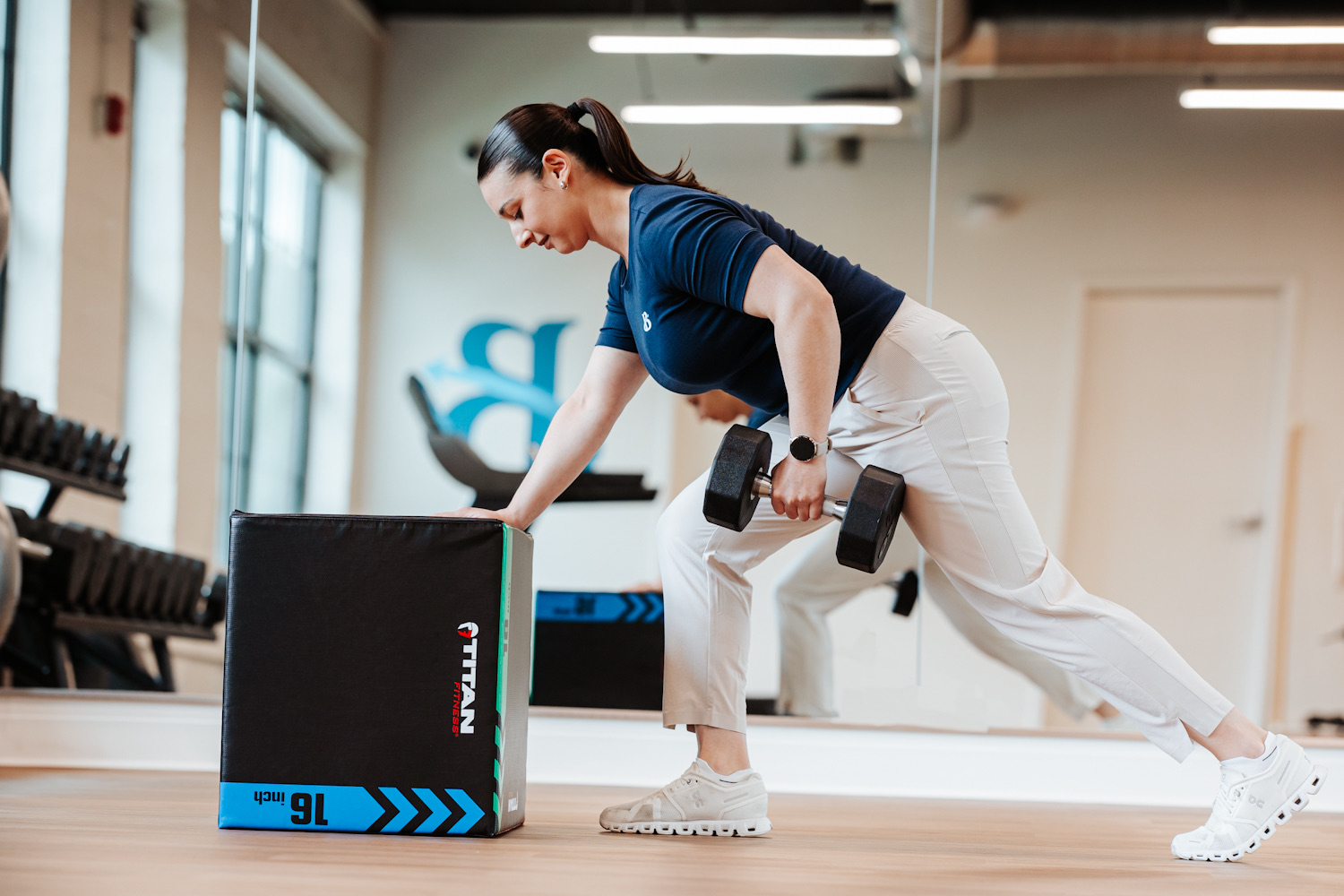
Muscle loss: Estrogen plays a role in muscle protein synthesis and recovery. As it declines, women become more susceptible to sarcopenia, the gradual loss of muscle mass. Research shows that resistance training can improve muscle mass in women throughout perimenopause and post-menopause.
Pelvic floor dysfunction: Your pelvic floor muscles are muscles, too! The decline of estrogen can make it more challenging for your pelvic floor muscle to remain strong. Fortunately, we also have evidence that pelvic floor muscle training can improve strength of your pelvic floor muscles even as estrogen levels decline.
Why Strength Training Matters
When a perimenopausal woman comes into our practice, we’re not just looking at the symptom she walked in with. We’re thinking about her whole system — her joints, her muscles, her pelvic floor, and what her body is going to need over the next decade.
That might mean we’re building a strength program that works to build and maintain as much muscle as possible, while estrogen is in flux in the background. It might mean we’re addressing pelvic floor changes before they become bigger problems. It might mean connecting the new hip pain or the worsening leaking to the hormonal shifts that are driving them, and building a plan around all of it.
If you’re in your late 30s or 40s and noticing changes you can’t quite explain, we’d love to talk.
References
Sources:
- PMID: 33299396
- https://www.acog.org/womens-health/faqs/the-menopause-years
- PMID: 40757596
- DOI: 10.3390/jcm12020548
- DOI: 10.1186/s12905-023-02749-7
- PMID: 40649174
Disclaimer: The exercises demonstrated in this post are intended for general educational purposes only and do not constitute medical advice. Always consult with a licensed physical therapist or healthcare provider before starting any new exercise program, especially if you are recovering from an injury or have specific medical concerns.