
At BEYOND PT, we work with a lot of women navigating core weakness and postpartum recovery. And we often hear the same thing: they’ve been doing core exercises for quite some time, but still don’t feel strong when they move. Let’s talk about why that may be.
Your Core is a 360-Degree System
When we talk about core strength, most people think of crunches. And while ab work can be really helpful (especially when done with proper pressure management and breath), it’s only hitting one small part of a much larger picture.
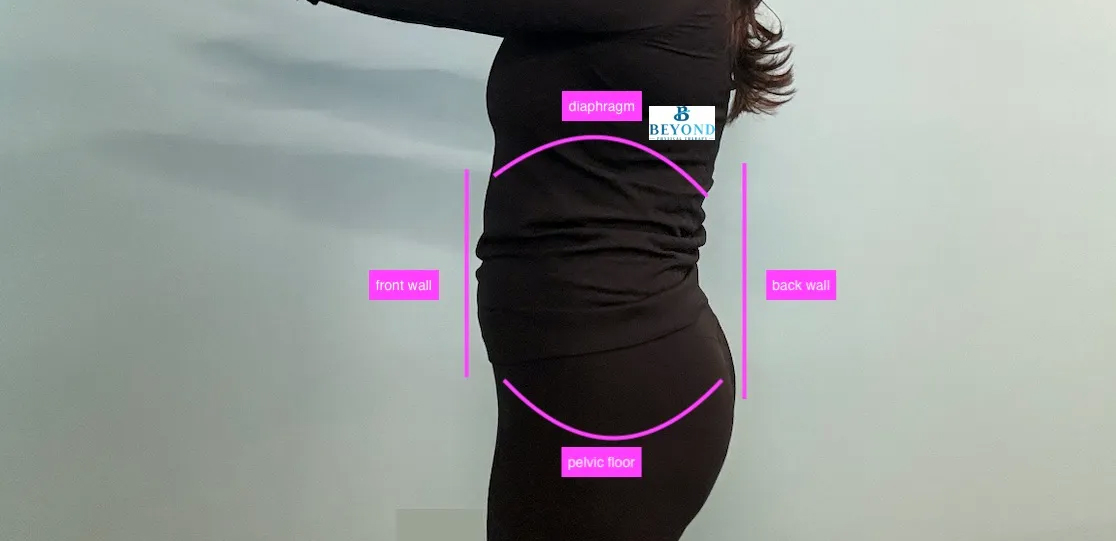
Your core isn’t just your six-pack muscles. Your core is your entire trunk, three hundred sixty degrees around. That’s your abs, your back, your side body, your pelvic floor, your hips, your rib cage, and your breath. All of it works together as one system.
When all the pieces of that system are working well together, you feel strong and stable. But when one piece isn’t pulling its weight, the other pieces have to compensate. And that’s where dysfunction shows up—and where that “strong” feeling disappears, even though you’re doing all the work.
So why doesn’t your core feel strong?
If you’ve been doing core exercises for months and still don’t feel that strength returning, we often find these five factors can play a role:
Diastasis Recti. One factor is diastasis recti, where there’s a space between your abdominal muscles that prevents them from fully coming together when they contract. This inherently creates some weakness.
Pressure Management. Most people stabilize through breath-holding (that grunt you hear when someone picks up their kid). While there’s a time and place for that, if it’s your only strategy, your muscles aren’t actually doing the work. Learning to exhale through effort and create stability with your muscles—rather than just holding your breath—changes everything.
Pelvic Floor Weakness. Your pelvic floor is the bottom of your core system. If those muscles aren’t working well, the base of your entire system isn’t as supported.
Hip Strength. Weak or tight hips create imbalances in how you move. When your hips can’t do their job, your entire system has to compensate.
Hip Mobility. Tight hips force the same compensations. Your body finds a way to move, but it’s usually at the expense of somewhere else—often your lower back or your breath pattern.
Here’s the thing
breathing, the right stability strategy, and good hip strength and mobility – they often have that “aha” moment. And they start to feel that strength they’ve been chasing.
If this resonates with you, let’s chat.
Sources:
PMID: 27324871
PMID: 10956340
PMID: 37867742
Disclaimer: The exercises demonstrated in this post are intended for general educational purposes only and do not constitute medical advice. Always consult with a licensed physical therapist or healthcare provider before starting any new exercise program, especially if you are recovering from an injury or have specific medical concerns.