
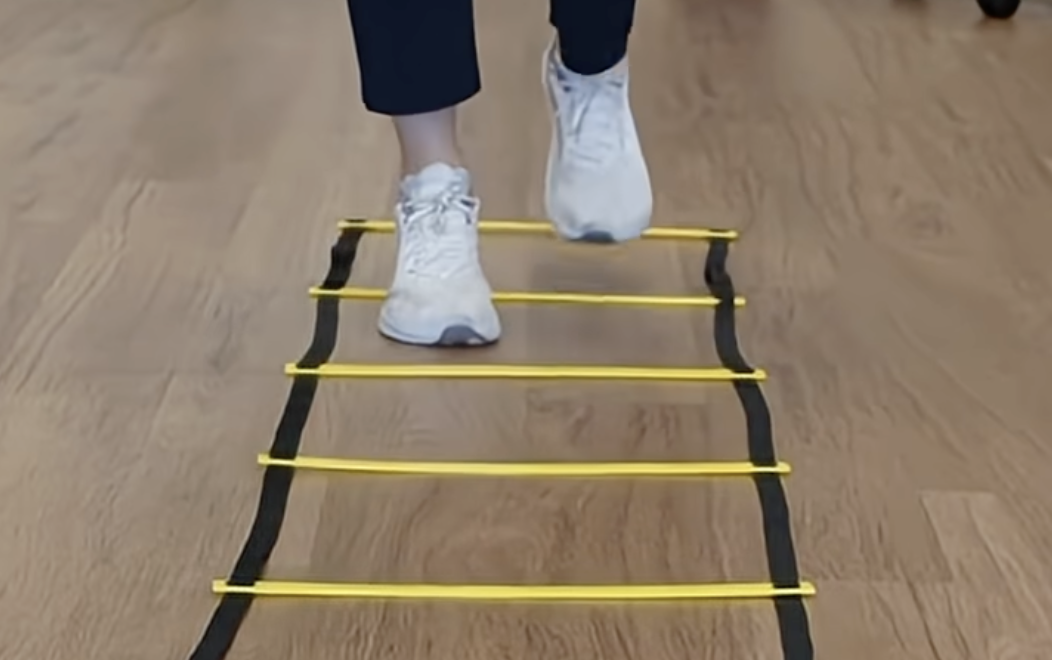
When most people think about “getting fit,” they typically think about weightlifting and cardio. Both of these forms of exercise are very helpful – but there’s another piece of fitness that we don’t talk about enough: how quickly your body can move.
In the clinic, we refer to this as agility training. It’s about making sure your body knows how to react fast, jump, change direction, and produce power – because those are the exact skills that keep us safe, independent and strong as we age.
Why Does Moving Quickly Matter if I’m Not Playing Sports?
Moving quickly is a functional skill that protects you in everyday life:
- Running after your toddler at the park
- Reacting fast enough to catch yourself if you trip on the sidewalk
- Having the leg power to steady yourself if your dog pulls hard on the leash
- Catching yourself on uneven terrain while hiking or running
As we age, we tend to lose the ability to generate force quickly. This can feel like impaired balance, feeling slower in your HIIT workouts, or finding that you trip more often. And it’s very common that we see pelvic floor dysfunction pop up during quick movements: such as urinary incontinence with running or jumping jacks.
Research on older adults consistently shows that power and reactive-strength training improve the outcomes that matter most for staying independent — things like walking speed, reactivity, and fall risk. This is different from just being strong. You can have strong muscles and still be slow to react. Training speed and power specifically is what closes that gap.
How Can I Train My Body to Move Quickly?
Your muscles are made up of different fibers:
1- Slow twitch fibers that are built for endurance and strength
2- Fast twitch fibers that are built for speed, reactivity, and power.
In a perfect world, we would have a balanced blend of both types of fibers in our muscles.
Traditional cardio and strength workouts typically train the slow-twitch endurance fibers, which means if we’re not intentionally training speed and reactivity, we’re neglecting a whole category of fast-twitch fibers.
The good news is that this is all modifiable with the right training, and it’s never too late to start!
Ready to move quicker? Let’s chat.
Sources:
PMID: 29155242
PMID: 31498922
Disclaimer: The exercises demonstrated in this post are intended for general educational purposes only and do not constitute medical advice. Always consult with a licensed physical therapist or healthcare provider before starting any new exercise program, especially if you are recovering from an injury or have specific medical concerns.