
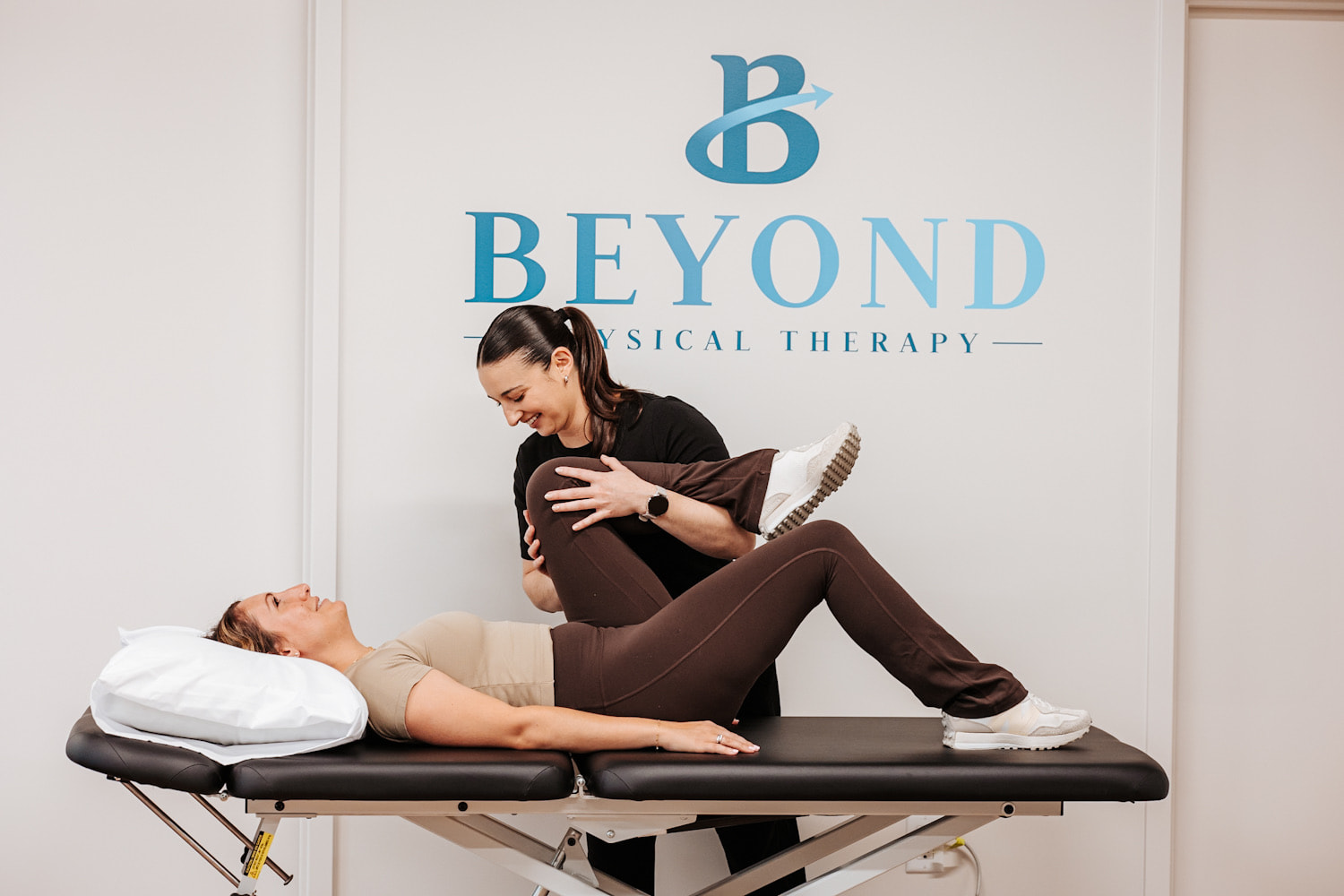
Have you ever seen 3 different PTs for your back, your hip, and your pelvic floor – but never had anyone sit down and connect the dots between all of it? You’re not alone. And honestly, it’s not your fault. Most of our healthcare systems today look at one problem at a time, with a different provider for each problem.
But that’s not how your body works.
Your body is ONE system.
Your back, hips, core, and pelvic floor are located so close to each other. They work together during everything you do. When one area is not working optimally, it affects the whole system.
Here’s a Common Example We See All the Time
A woman comes in for pelvic floor care. She experiences urinary incontinence when she runs, or jumps, or sneezes. We assess her pelvic floor – but we don’t stop there. We also look at her hips, her back, her movement patterns, and how her whole system is functioning under load. So often, we find hip tightness, restricted back mobility, and weakness in the powerhouse muscles that are supposed to be sharing the work her pelvic floor has been doing alone. We address all of it – flexibility, strength, coordination, pressure management. Her leaking improves. Her back pain she stopped mentioning because she’d accepted it as normal? That improves too.
This is why pelvic floor PT works best when it looks at the whole picture. Kegels or pelvic wands alone don’t solve the problem. Connecting the pelvic floor to everything around it does.
The Back, Hip, and Pelvic Floor Connection
Your core is the center of your body – think of this as the center of the system. Your diaphragm is the top of the system, your abdominal muscles form the front and the sides, your back muscles form the back, and the pelvic floor is the bottom of the system. Every time you lift something, run, jump, or cough, your trunk has to manage the pressure inside. All of these components have to work together. When one part isn’t pulling its weight, something else compensates. That compensation is often where pain and dysfunction show up. Check out another one of our blog posts for more information on this: What is the Pelvic Floor?
We have research showing that pelvic floor strengthening has meaningful reductions in low back pain, with the strongest results seen in postpartum and pregnant women. We also have research showing that women with urinary dysfunction were found to have weakness in their hips, despite having strong pelvic floor muscles. The back, the hips, and the pelvic floor are not 3 separate problems: they are one system.
What Does This Look Like In Practice?
At BEYOND, every evaluation starts with understanding the whole picture – not just the symptom that brought you in the door. We ask about your activity goals, your pregnancy history, any other areas of pain, how your pelvic floor is functioning, what you’ve tried before, and what you actually want your body to be able to do.
Then we build a plan around all of it.
This might mean we’re working on hip strength and pelvic floor coordination in the same session. It might mean the reason your knee keeps flaring up has something to do with how your body has been compensating since your last delivery. Add in the hormonal changes of perimenopause, which affects many parts of the system, and you definitely want to work with someone who can see the whole picture.
This is what physical therapy is supposed to be like.
If you’ve been treating your body in pieces and still feel like something isn’t adding up, it might be time to take a look at the whole picture.
Whether you’re dealing with a nagging orthopedic issue like back or knee pain, or having pelvic floor symptoms like leakage or heaviness, or just feel like you never got that core strength back after having kids – we’d love to talk.
References
PMID: 34366727
PMID: 36205811
Disclaimer: The exercises demonstrated in this post are intended for general educational purposes only and do not constitute medical advice. Always consult with a licensed physical therapist or healthcare provider before starting any new exercise program, especially if you are recovering from an injury or have specific medical concerns.